





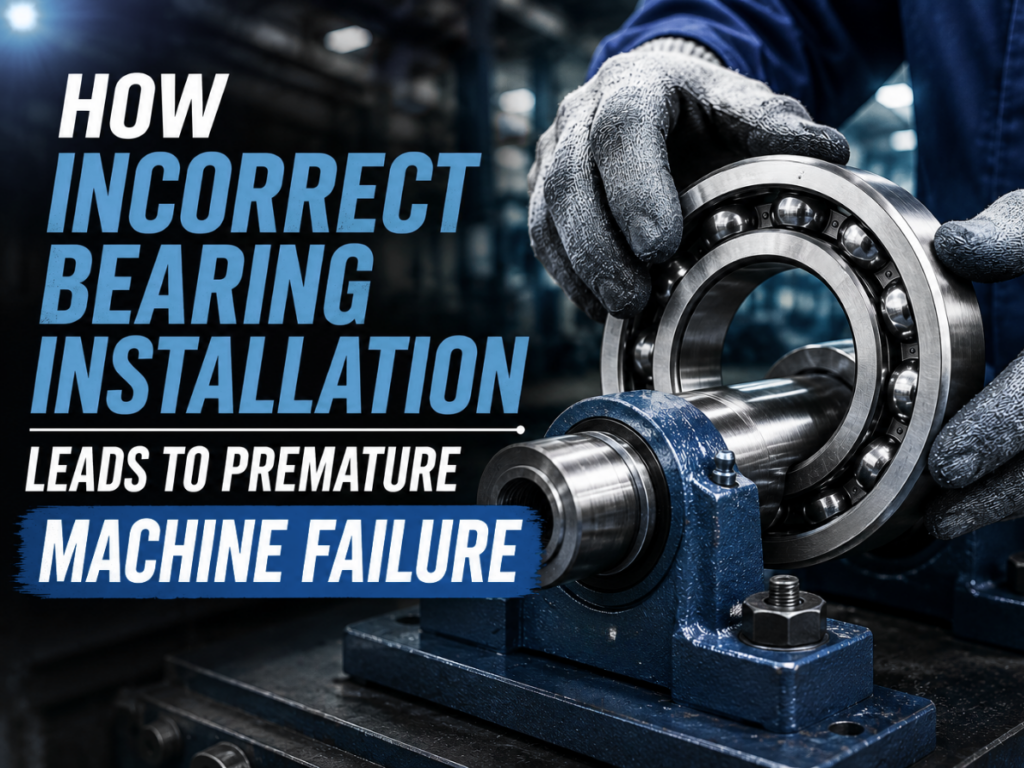
Incorrect bearing installation is one of the leading causes of premature machine failure across industrial applications. Bearings are among the most critical components in industrial machinery, supporting rotating shafts, reducing friction, and ensuring smooth equipment operation. Even a high-quality bearing can fail prematurely when incorrect bearing installation practices are followed.
Even the best bearing can fail prematurely if installed incorrectly. Improper fitting, misalignment, contamination, or incorrect handling can significantly reduce bearing life, leading to unexpected downtime, increased maintenance costs, and reduced operational efficiency.
Understanding the impact of incorrect bearing installation can help industries improve equipment reliability and maximize machine performance.
Why Avoiding Incorrect Bearing Installation Matters
A bearing is designed to operate under precise conditions. During installation, even small errors can create excessive stress on bearing components, resulting in:
- Increased friction
- Excessive heat generation
- Premature wear
- Lubrication failure
- Vibration and noise
- Reduced machine efficiency
Research across industrial applications shows that a significant percentage of bearing failures are directly linked to improper mounting and handling practices rather than manufacturing defects.
Common Bearing Installation Mistakes
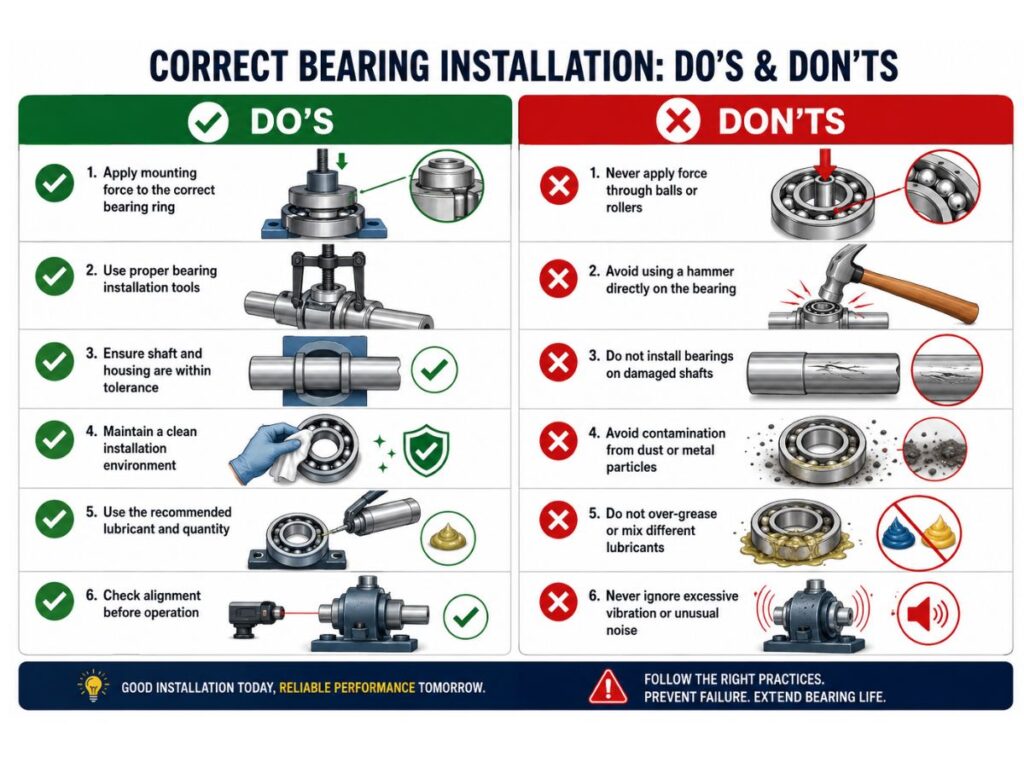
1. Applying Force to the Wrong Ring
One of the most common installation errors is applying mounting force through the rolling elements.
For example, when fitting a bearing onto a shaft, force should be applied only to the inner ring. Applying force through the outer ring transfers stress to the rollers or balls, creating microscopic damage that can lead to early failure.
2. Improper Shaft or Housing Fits
Incorrect shaft or housing tolerances can create excessive interference or loose fits. Problems caused by improper fits include:
- Inner ring creep
- Outer ring movement
- Excessive heat generation
- Reduced bearing accuracy
- Increased vibration
Proper dimensional checks should always be performed before installation.
3. Misalignment During Installation
When bearings are installed without proper alignment, uneven load distribution occurs across the rolling elements. This can result in:
- Accelerated wear
- Increased friction
- Higher operating temperatures
- Reduced bearing life
Even slight angular misalignment can significantly impact machine performance over time.
4. Contamination During Handling
Dust, dirt, moisture, and metal particles can enter the bearing during installation if proper cleanliness standards are not maintained. Contaminants can:
- Damage raceways
- Degrade lubrication
- Increase friction
- Cause surface fatigue
Maintaining a clean installation environment is essential for long-term bearing reliability.
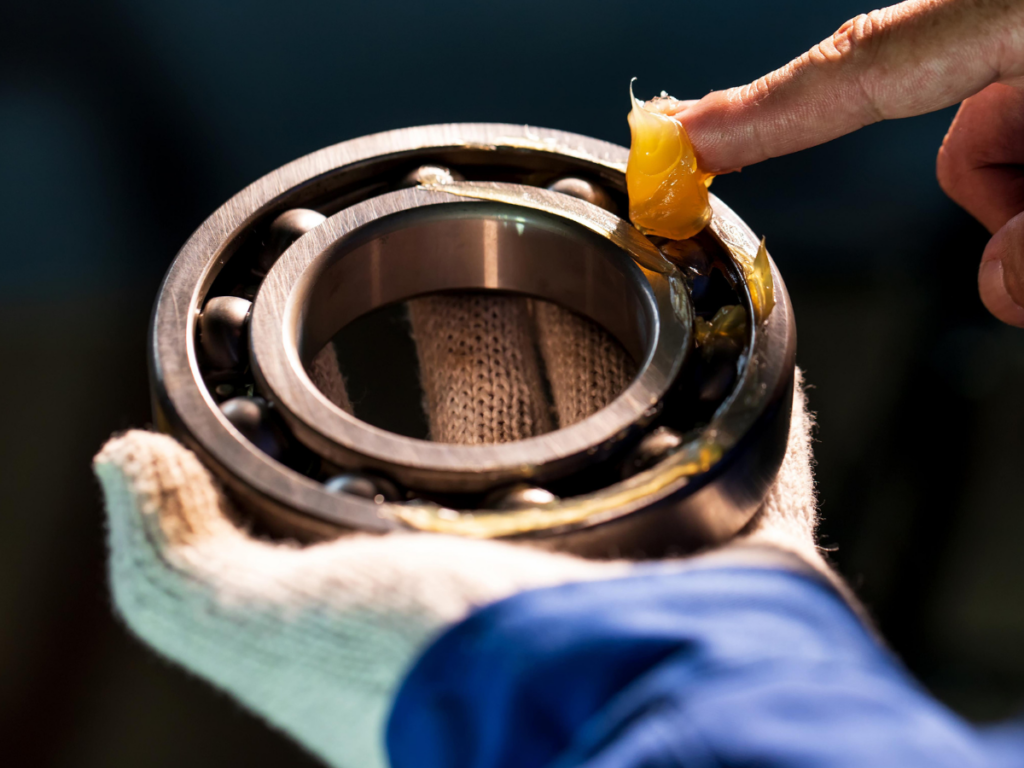
5. Incorrect Lubrication Practices
Using the wrong lubricant or applying an incorrect quantity can cause bearing failure. Common lubrication issues include:
- Over-greasing
- Under-greasing
- Mixing incompatible lubricants
- Using unsuitable lubricant grades
Proper lubrication reduces friction, controls temperature, and protects against wear.
Signs of Bearing Damage Caused by Improper Installation
Installation-related issues often appear shortly after machinery enters operation. Common warning signs include:
- Excessive vibration
- Unusual noise
- Elevated operating temperatures
- Grease leakage
- Increased power consumption
- Reduced machine accuracy
Ignoring these symptoms can lead to complete bearing failure and damage to surrounding machine components.
The Cost of Premature Bearing Failure
When a bearing fails unexpectedly, the impact extends far beyond replacement costs. Industries may face:
Production Downtime
Unplanned stoppages can disrupt operations and affect production schedules.
Higher Maintenance Costs
Emergency repairs often require additional labor, spare parts, and troubleshooting efforts.
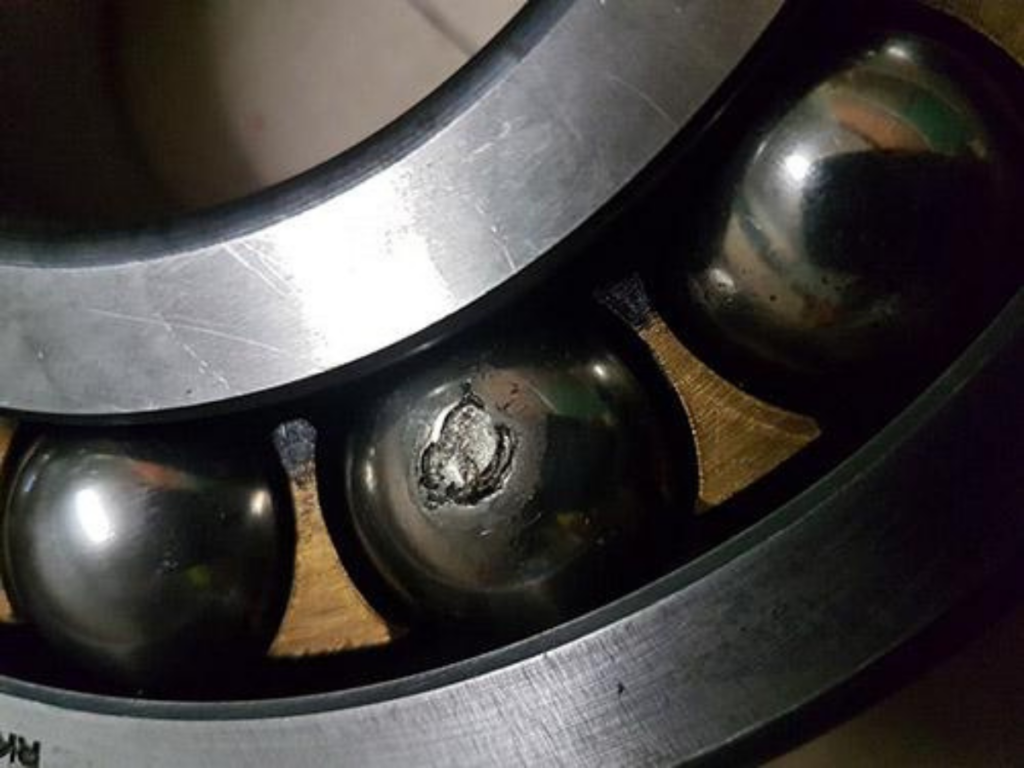
Equipment Damage
A failed bearing can damage shafts, housings, gears, seals, and other critical components.
Reduced Operational Efficiency
Machines operating with damaged bearings consume more energy and deliver lower performance.
Best Practices for Correct Bearing Installation
To maximize bearing life and machine reliability, industries should follow proven installation procedures.
Use Proper Installation Tools
Specialized mounting tools ensure force is applied correctly and evenly during installation.
Verify Shaft and Housing Dimensions
Check tolerances and surface finishes before mounting the bearing.
Maintain Cleanliness
Keep bearings in their packaging until installation and work in a contamination-free environment.
Follow Recommended Lubrication Guidelines
Use the correct lubricant type and quantity specified for the application.
Ensure Proper Alignment
Accurate alignment reduces stress and promotes even load distribution.
Train Maintenance Personnel
Proper training helps technicians identify and avoid common installation mistakes.
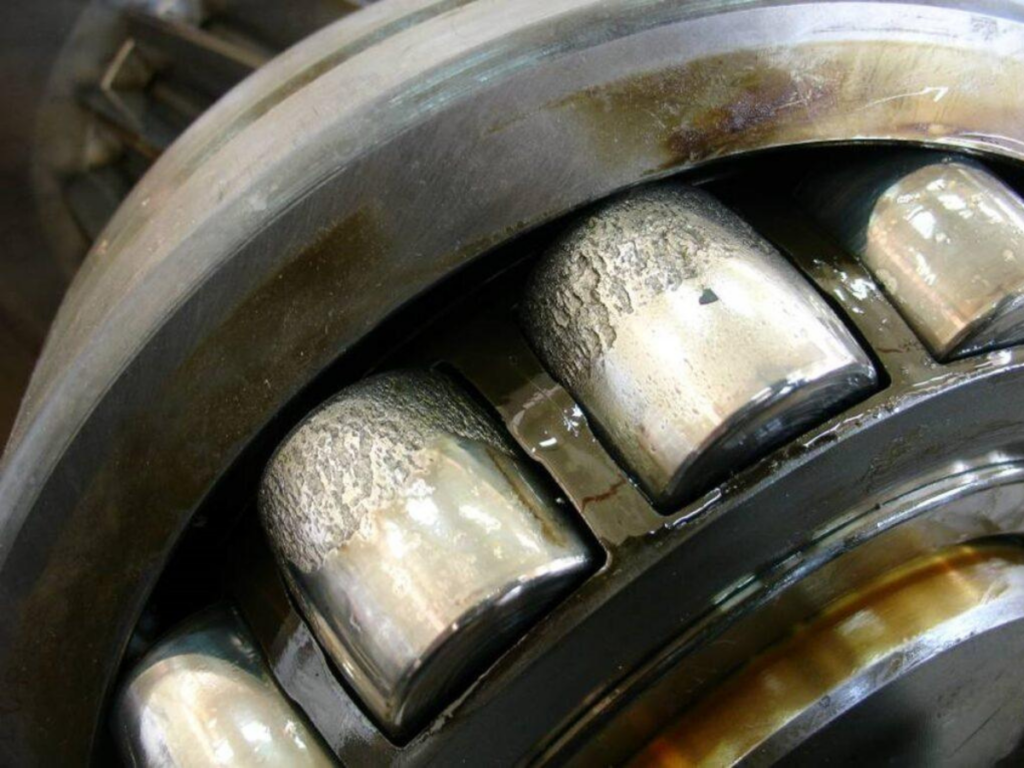
Why Quality Bearings Still Need Proper Installation
Premium bearings are engineered for durability, precision, and long service life. However, their performance can only be achieved when installation practices match the quality of the product.
At ZNL Bearings, every bearing is manufactured with strict quality control standards to deliver dependable performance across industries such as mining, material handling, heavy engineering, agriculture, and industrial automation.
When combined with proper installation and maintenance practices, high-quality bearings help reduce downtime, improve productivity, and extend equipment life.
Conclusion
Correct bearing installation is a critical factor in ensuring machine reliability, operational efficiency, and long service life. Even minor installation errors can lead to premature wear, increased maintenance costs, and unplanned downtime.
At ZNL Bearings, we understand that bearing performance depends not only on product quality but also on proper application and installation practices. That’s why every ZNL bearing is manufactured with a focus on precision, consistency, and reliability to meet the demands of industries such as mining, material handling, heavy engineering, and industrial automation.
When quality-engineered bearings are combined with correct installation and maintenance procedures, businesses can achieve higher equipment uptime, lower operating costs, and improved productivity. By choosing ZNL Bearings, industries gain a dependable partner committed to delivering performance they can trust, every step of the way.
