



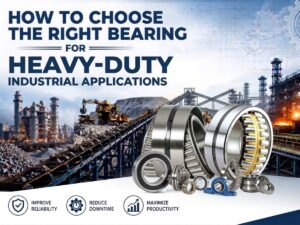
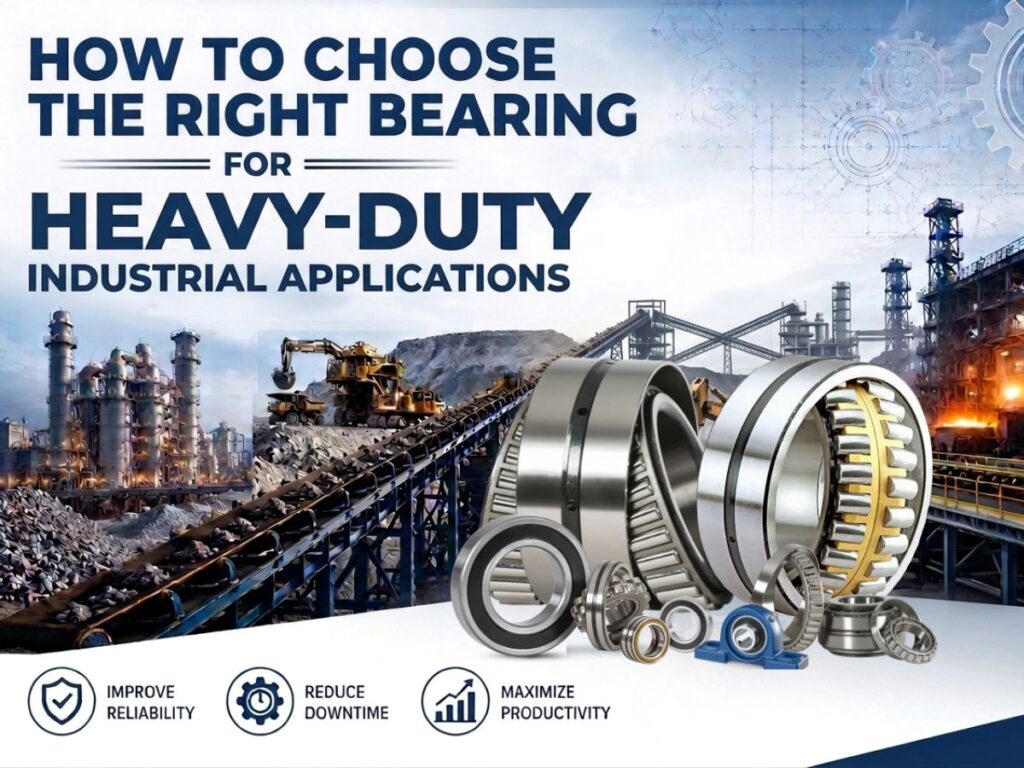
Industrial bearing selection plays a critical role in ensuring the reliability, efficiency, and longevity of heavy-duty industrial equipment. From cement plants and mining operations to steel mills, material handling systems, and industrial gearboxes, choosing the right bearing based on load, operating conditions, and application requirements helps reduce downtime, lower maintenance costs, and maximize equipment performance.
Selecting the right bearing is not just about matching dimensions it is about ensuring reliability, reducing maintenance costs, and maximizing equipment uptime. An incorrectly selected bearing can lead to premature failures, increased energy consumption, frequent maintenance, and costly production downtime.
This guide explains the key factors engineers, maintenance teams, and OEMs should consider when selecting bearings for demanding industrial applications
Why Bearing Selection Matters
Bearings are fundamental components that support rotating shafts while minimizing friction between moving parts. In heavy-duty applications, they directly influence machine efficiency, reliability, and operational costs.
A properly selected bearing helps:
- Increase equipment uptime
- Improve machine efficiency
- Reduce unexpected breakdowns
- Minimize maintenance costs
- Extend equipment service life
- Enhance operational safety
Rather than selecting a bearing based solely on size, it’s essential to evaluate the application’s operating conditions and performance requirements.
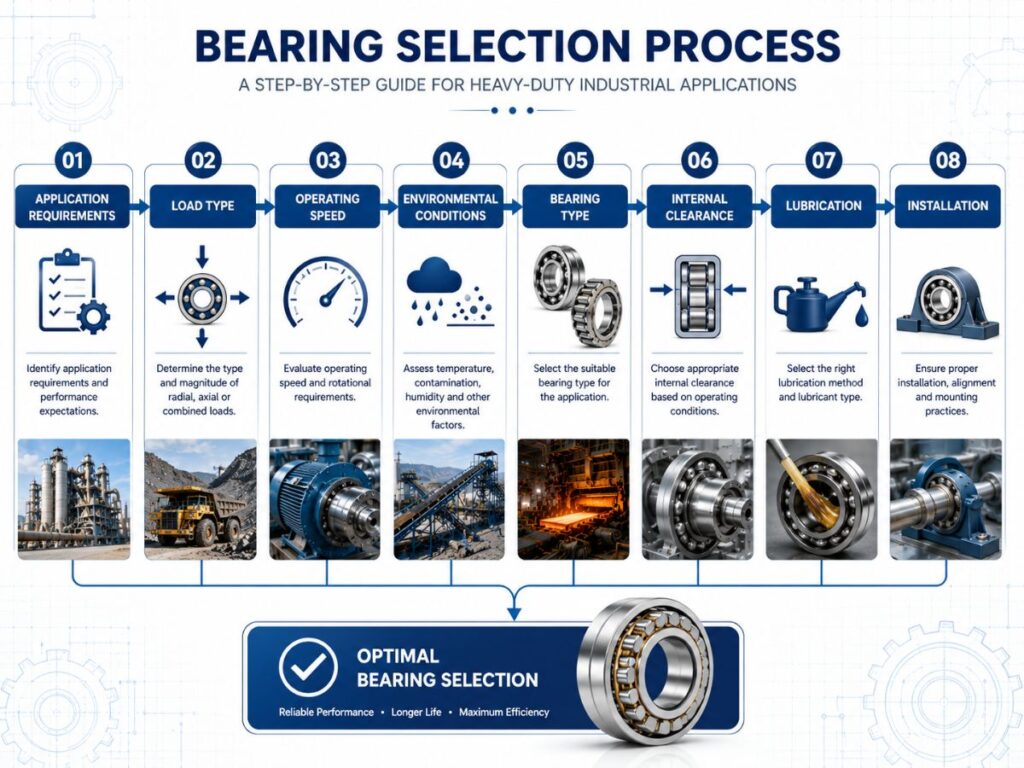
Step 1: Understanding Load Requirements for Industrial Bearing Selection
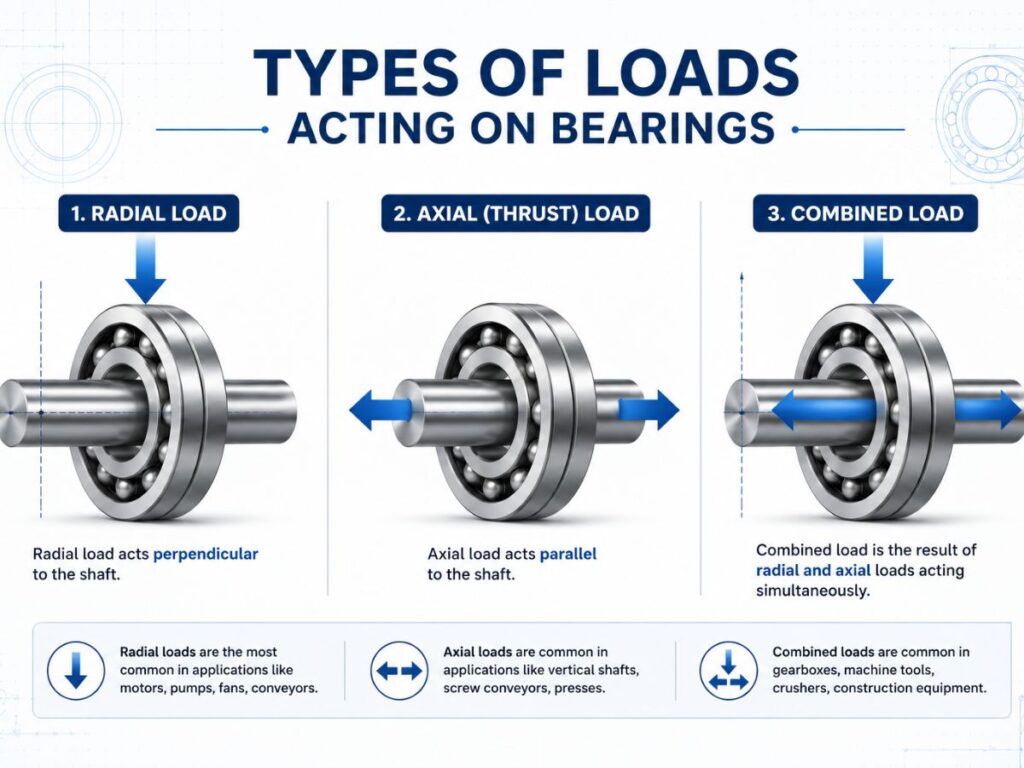
The industrial bearing selection process begins with understanding the operating conditions and load requirements of your application.
Radial Load
A radial load acts perpendicular to the shaft and is common in:
- Electric motors
- Pumps
- Conveyors
- Fans
- Compressors
Deep Groove Ball Bearings and Cylindrical Roller Bearings are widely used where radial loads are dominant.
Axial (Thrust) Load
Axial loads act parallel to the shaft and are common in:
- Vertical shafts
- Screw conveyors
- Industrial presses
- Lift mechanisms
Applications with significant thrust loads require bearings specifically designed to accommodate axial forces.
Combined Load
Most industrial equipment experiences both radial and axial loads simultaneously.
Examples include:
- Industrial gearboxes
- Crushers
- Rolling mills
- Material handling equipment
- Construction machinery
Tapered Roller Bearings are particularly suitable for handling combined loads while maintaining operational stability.
Step 2: Choosing the Right Bearing Type
Choosing the correct bearing type is one of the most important aspects of industrial bearing selection.
Deep Groove Ball Bearings
Deep Groove Ball Bearings are versatile and suitable for applications requiring:
- High rotational speeds
- Moderate radial and axial loads
- Low friction
- Quiet operation
Typical applications include:
- Electric motors
- Pumps
- Agricultural equipment
- Industrial fans
Spherical Roller Bearings
When machinery experiences heavy loads, shaft deflection, or misalignment, Spherical Roller Bearings offer an ideal solution.
They provide:
- High radial load capacity
- Ability to accommodate shaft misalignment
- Excellent performance under shock loading
- Long service life in harsh environments
Common applications:
- Mining equipment
- Cement plants
- Vibrating screens
- Crushers
- Heavy conveyors
Cylindrical Roller Bearings
These bearings are designed primarily for heavy radial loads and high rigidity.
Advantages include:
- High load carrying capacity
- Excellent radial stiffness
- Suitable for high-speed industrial applications
Applications:
- Steel mills
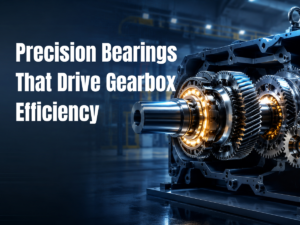
- Industrial gearboxes
- Machine tools
- Power transmission systems
Tapered Roller Bearings
Tapered Roller Bearings are engineered to support combined radial and axial loads simultaneously.
They are commonly used in:
- Gearboxes
- Construction equipment
- Material handling machinery
- Heavy-duty industrial drives
Their design provides excellent load distribution and reliable performance under demanding operating conditions.
Step 3: Operating Speed and Bearing Performance
Every bearing has a recommended operating speed.
Higher rotational speeds generate:
- Increased friction
- More heat
- Greater lubricant stress
Selecting a bearing capable of operating efficiently at the required speed helps maintain performance while preventing premature wear.
Step 4: How Operating Conditions Affect Bearing Selection
Industrial environments often expose bearings to conditions that significantly affect their performance.
Key environmental considerations include:
- Dust and abrasive particles
- Moisture and water ingress
- High operating temperatures
- Chemical contaminants
- Heavy vibration
- Continuous operation
Selecting the appropriate sealing arrangement and lubrication system is essential for maintaining bearing reliability under these conditions.
Step 5: Selecting the Right Internal Clearance
Internal clearance refers to the small amount of internal movement between the rolling elements and raceways before installation.
The appropriate clearance depends on factors such as:
- Operating temperature
- Load conditions
- Shaft and housing fits
- Rotational speed
Using the correct internal clearance helps reduce excessive heat generation and contributes to longer bearing life
Step 6: Lubrication Requirements for Industrial Bearings
Lubrication is one of the most critical factors influencing bearing performance.
A properly lubricated bearing experiences:
- Reduced friction
- Lower operating temperatures
- Less wear
- Improved corrosion protection
- Extended service life
Whether grease or oil lubrication is used should depend on the application’s operating conditions, maintenance schedule, and speed requirements.
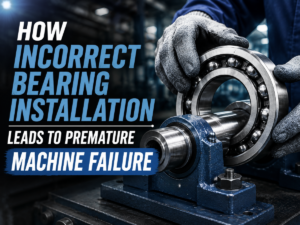
Step 7: Proper Bearing Installation Practices
Even the highest-quality bearing can fail prematurely if installed incorrectly.
Best practices include:
- Maintaining clean installation conditions
- Using proper mounting tools
- Ensuring correct shaft and housing fits
- Verifying alignment
- Following recommended installation procedures
Proper installation minimizes unnecessary stress and helps maximize bearing performance.
Common Heavy-Duty Industrial Applications
Heavy-duty bearings play a vital role across numerous industries, including:
- Cement Industry
- Mining & Quarrying
- Steel & Metal Processing
- Material Handling Equipment
- Industrial Gearboxes
- Pumps & Motors
- Construction Machinery
- Agricultural Equipment
- Power Generation
Each application presents unique challenges, making bearing selection a critical engineering decision.
Why Industrial Buyers Choose ZNL Bearings
At ZNL Bearings, we support customers with expert industrial bearing selection to help improve equipment reliability and operational efficiency.
Our comprehensive range includes:
- Deep Groove Ball Bearings
- Spherical Roller Bearings
- Cylindrical Roller Bearings
- Tapered Roller Bearings
Manufactured using advanced production processes and stringent quality control, our bearings are designed to support demanding industrial applications across sectors such as mining, cement, steel, material handling, agriculture, pumps, motors, and gearboxes.
With a strong global presence and exports to over 45 countries, ZNL Bearings continues to deliver dependable bearing solutions trusted by OEMs, distributors, and industrial customers worldwide.
Conclusion
Selecting the right bearing is a strategic decision that directly impacts machine performance, maintenance costs, and operational efficiency.
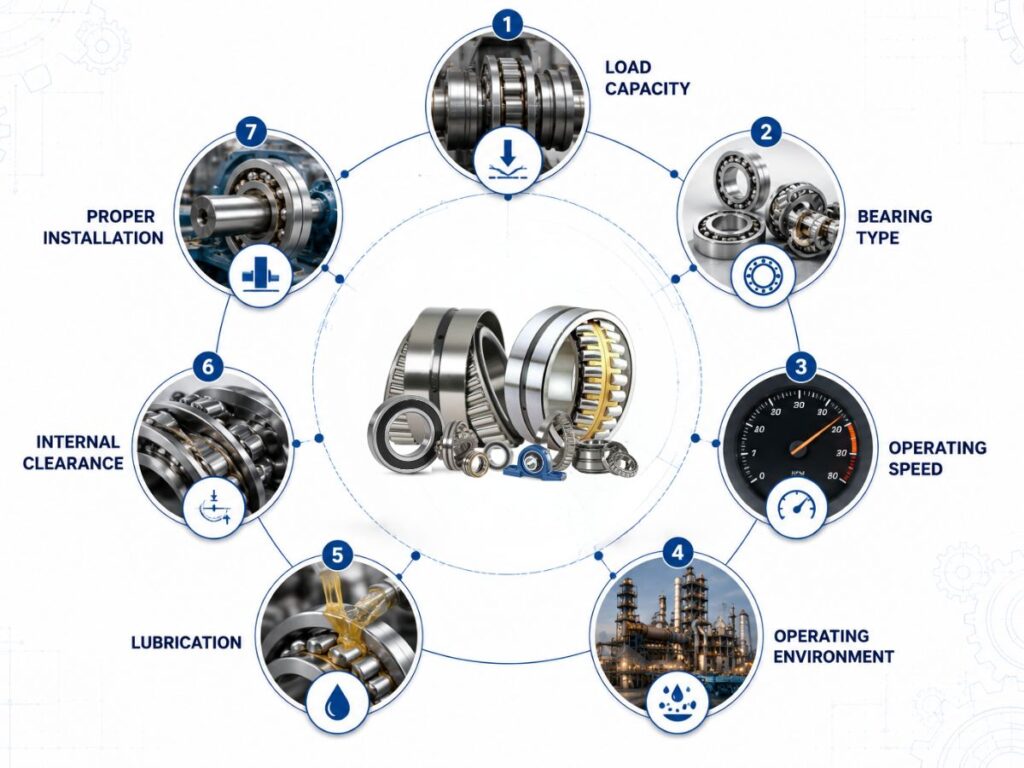
Before choosing a bearing, always evaluate:
- Load type
- Operating speed
- Environmental conditions
- Bearing design
- Internal clearance
- Lubrication requirements
- Installation practices
Choosing the right bearing is not just about selecting the correct size—it is about improving machine reliability, reducing downtime, and lowering the total cost of ownership.
Need help selecting the right bearing for your application? Connect with ZNL Bearings for expert application support and product recommendations tailored to your operating conditions.
Frequently Asked Questions
Which bearing is best for heavy-duty industrial applications?
The ideal bearing depends on the application. Spherical Roller Bearings are commonly used for heavy radial loads and misalignment, while Tapered Roller Bearings are preferred for combined radial and axial loads.
What causes premature bearing failure?
Improper bearing selection, inadequate lubrication, contamination, incorrect installation, excessive loading, and misalignment are among the most common causes.
How do I select the right bearing?
Evaluate the application’s load, speed, operating environment, temperature, lubrication requirements, and mounting conditions before selecting a bearing.
Which industries use heavy-duty bearings?
Heavy-duty bearings are widely used in cement, mining, steel, construction, material handling, power generation, agriculture, pumps, motors, and industrial gearbox applications.
