




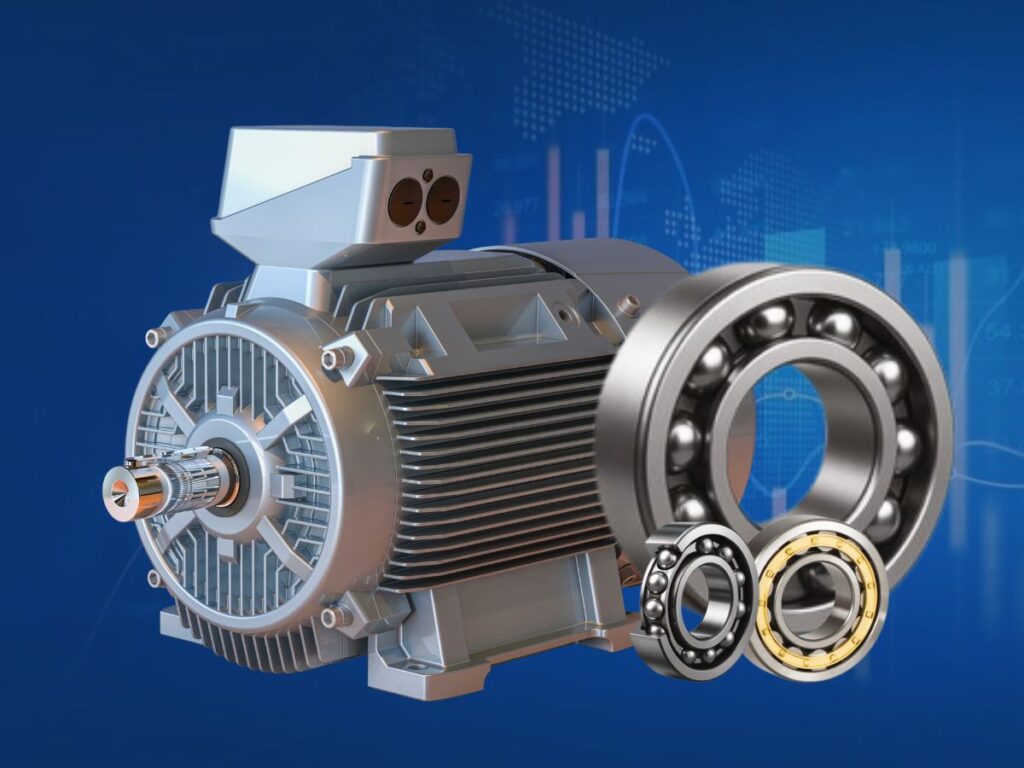
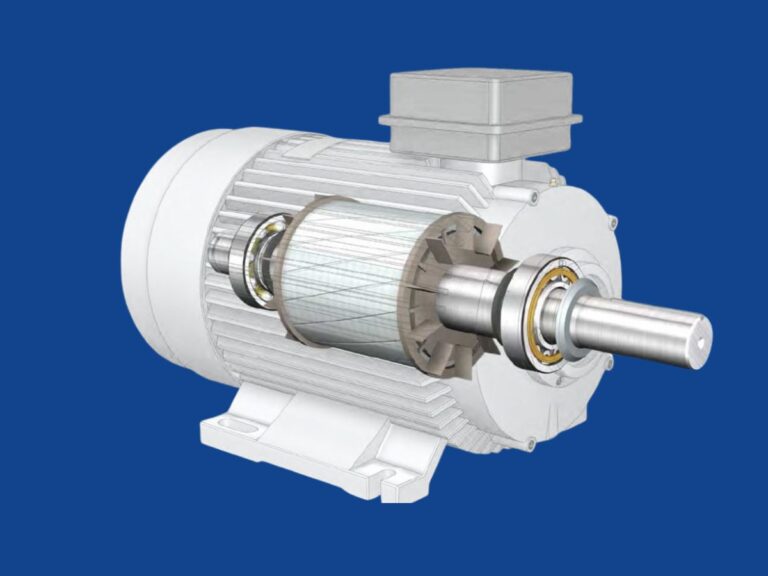
High-speed industrial motors are used in applications where stable performance, low vibration, and long service life are essential. In such environments, the bearing is one of the most critical components inside the motor. It supports rotation, carries load, controls friction, and influences temperature during operation.
Bearing selection for high-speed motors plays a critical role in ensuring stable performance, low vibration, and long service life in industrial applications. When a motor runs at high RPM for long durations, the operating conditions become more demanding. Even a small mismatch in bearing selection can lead to overheating, noise, lubrication issues, or premature failure. This is why selecting the right bearing for high-speed industrial motors should always be treated as an engineering decision rather than a routine purchase.
Why Bearing Selection Matters in High-Speed Motors
In many industrial cases, motor problems are often assumed to be electrical. However, bearing-related issues are also a major cause of poor performance and early breakdown. The wrong bearing may still operate for some time, but under high-speed conditions, small technical limitations become much more significant.
A properly selected bearing helps achieve:
· Smooth and stable rotation
· Lower friction and temperature rise
· Reduced vibration and noise
· Better equipment reliability
· Longer bearing service life
For companies operating continuous-duty motors, correct bearing selection also reduces maintenance frequency and unplanned downtime.
What Changes as Motor Speed Increases
As motor speed rises, bearing operating conditions change considerably. A bearing that performs well at moderate speed may not remain reliable in a high-speed environment.
The main changes include:
1. Higher Friction
At higher rotational speeds, friction inside the bearing increases. This leads to more heat generation and places greater demand on lubrication performance.
2. Faster Temperature Rise
As speed increases, heat builds more quickly. If the bearing arrangement is not designed for this thermal effect, internal stress may increase and bearing life may decrease.
3. More Sensitive Lubrication Performance
Lubrication behaviour changes significantly at high RPM. Grease or oil that works well at lower speed may not provide the same film stability in faster applications.
4. Tighter Tolerance Requirements
At high speed, even minor dimensional variation, mounting error, or misalignment can create vibration, noise, and performance instability.
Best Bearing Types for High-Speed Industrial Motors
The selection of the correct bearing type depends on speed, load direction, and application requirements.
Deep Groove Ball Bearings
Deep groove ball bearings are among the most common choices for electric motors. They are suitable for high-speed operation because they offer:
· Low friction
· Smooth running performance
· Good radial load capacity
· Moderate axial load capability
For many standard motor applications, deep groove ball bearings provide a balanced and reliable solution.
Angular Contact Ball Bearings
Where axial loads are higher or shaft positioning is more critical, angular contact ball bearings may be considered. These bearings are often used where high-speed capability must be combined with better axial support.
However, bearing type alone does not determine performance. Internal clearance, cage design, lubrication method, and mounting accuracy are equally important.
Importance of Internal Clearance in High-Speed Bearings
Internal clearance is one of the most important factors in bearing selection for electric motors. During high-speed operation, the bearing temperature rises and thermal expansion takes place. This can reduce the internal running clearance during operation.
If the bearing becomes too tight at operating temperature, it can result in:
· Increased friction
· Higher internal stress
· Excessive heat generation
· Reduced service life
For this reason, many high-speed motor applications use C3 clearance bearings. C3 internal clearance allows additional room for thermal expansion and helps maintain proper operating conditions once the motor reaches working temperature.
Bearing Lubrication for High-Speed Motor Applications
Lubrication has a direct effect on speed capability, operating temperature, and bearing life. In many cases, bearing failure is not caused by the bearing material itself, but by unsuitable lubrication practices.
Grease Lubrication
Grease is commonly used in electric motors because it is simple, convenient, and suitable for many standard applications. However, grease selection must be matched to speed and duty cycle.
Important points to consider:
· Excess grease can create additional heat
· Insufficient grease can reduce lubrication film strength
· Base oil viscosity must suit operating speed
· Grease fill quantity must be controlled carefully
Oil Lubrication
For higher-speed or continuous-duty applications, oil lubrication may be preferred because it provides better heat dissipation and more stable lubrication under demanding conditions.
The objective of any lubrication method is the same: to maintain a stable film between rolling elements and raceways while keeping temperature under control.
Heat Management in High-Speed Motor Bearings
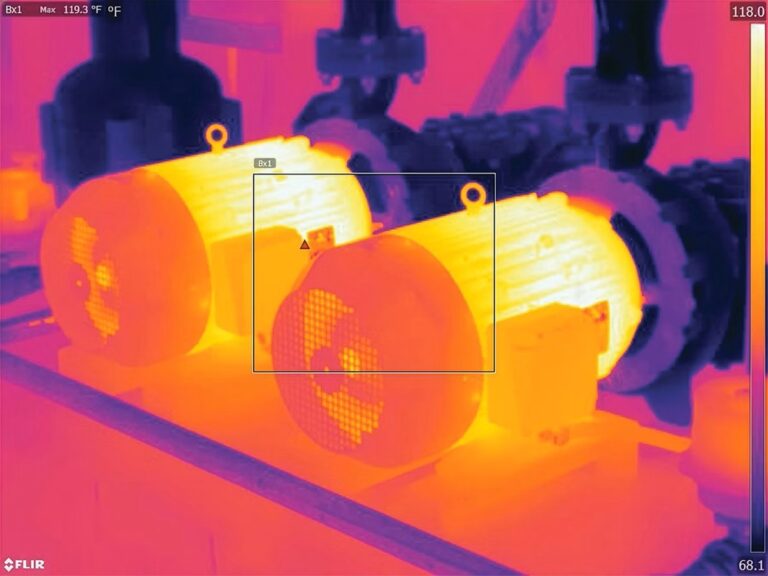
Heat is one of the main challenges in high-speed motor bearing applications. As rotational speed increases, frictional heat becomes more significant. If heat is not managed properly, it can affect lubrication performance and internal clearance.
Poor heat control may result in:
· Lubricant degradation
· Reduced operating clearance
· Surface damage
· Premature wear
· Shortened bearing life
This is why engineers must evaluate speed, lubrication, fits, and operating temperature together rather than as separate factors.
Why Precision and Mounting Accuracy Are Critical
At high speed, vibration becomes much more noticeable. Small installation errors that may be tolerated at lower RPM can become serious problems in high-speed operation.
The following factors have a direct impact on performance:
· Raceway accuracy
· Surface finish quality
· Shaft and housing fits
· Alignment during mounting
· Control of preload and distortion
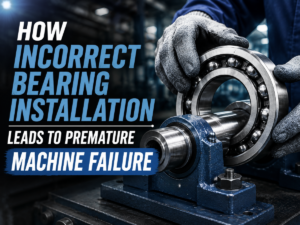
Even a high-quality bearing can perform poorly if the installation conditions are incorrect. Proper mounting practices are essential to achieve low vibration, low noise, and stable running.
Common Causes of bearing Failure in high speed motors
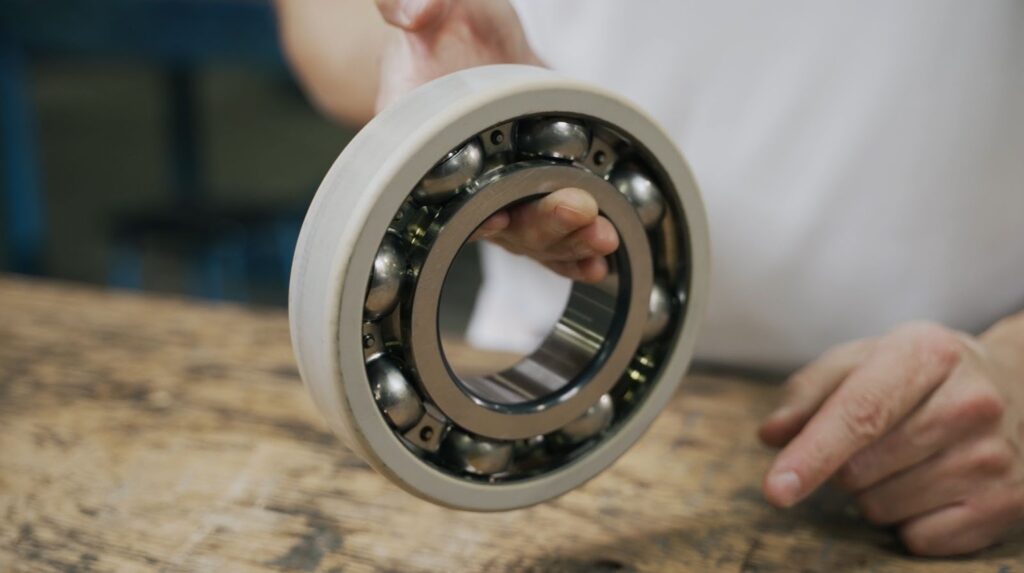
Many failures in industrial motor bearings are linked to application issues rather than product defects. Some common reasons include:
- Incorrect bearing type selection
- Wrong internal clearance
- Over-lubrication or under-lubrication
- Poor shaft or housing fit
- Misalignment during assembly
- Inadequate consideration of operating speed and temperature
Understanding these causes can help maintenance teams and engineers make better decisions during bearing selection and replacement.
Checklist for Selecting High-Speed Motor Bearings
Before finalizing a bearing for a high-speed motor application, it is useful to review the following points:
- Is the bearing speed rating suitable for the application?
- Has internal clearance been selected correctly, such as C3 where needed?
- Is the lubrication method suitable for the operating RPM?
- Are shaft and housing fits properly controlled?
- Has operating temperature been considered?
- Are vibration and mounting accuracy being addressed?
- Does the application involve mainly radial load or combined load?
This checklist helps reduce the risk of early failure and supports more reliable motor performance.
Conclusion
Selecting the right bearing for high-speed industrial motors requires careful evaluation of speed, load, lubrication, heat, and mounting conditions. A bearing that appears suitable at first glance may not perform reliably when operating speed and temperature increase.
The right bearing supports smooth rotation, minimizes friction, controls temperature, and improves overall motor reliability. By understanding the relationship between internal clearance, lubrication, precision, and operating conditions, engineers can reduce failures and achieve longer service life in demanding motor applications.
