


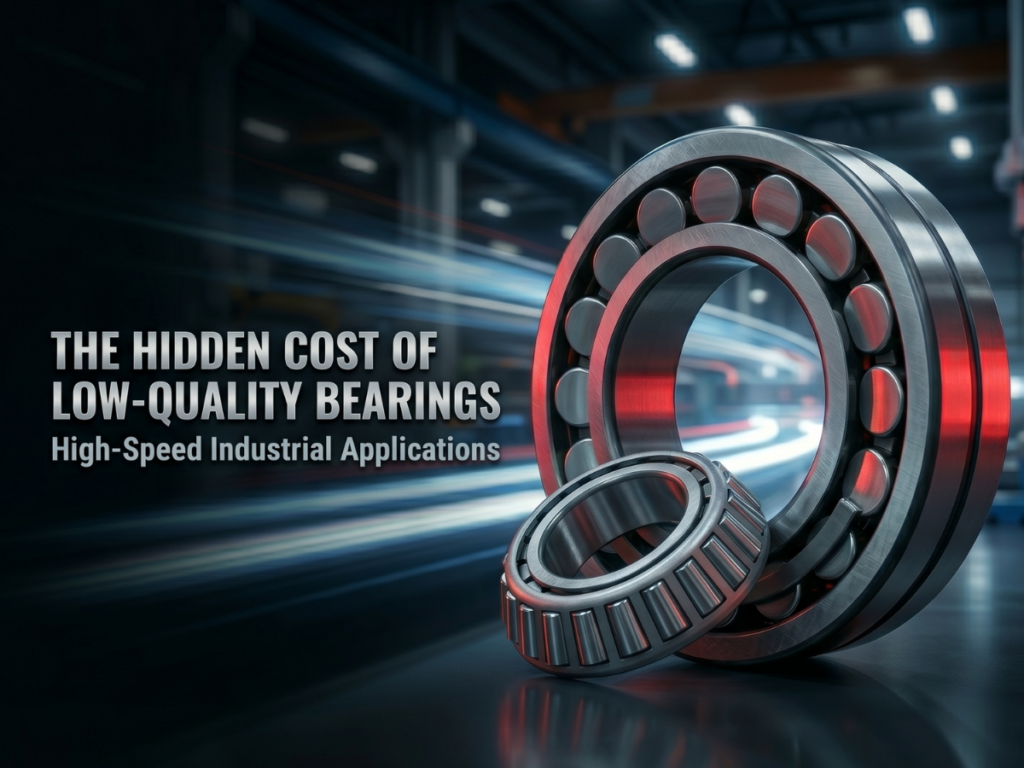
In industrial operations, purchasing decisions are often driven by cost. While this approach may work for some consumables, it can become expensive when applied to critical machine components such as bearings. Low quality bearings may appear to reduce procurement costs, but in high-speed industrial applications, they often lead to higher maintenance expenses, downtime, and equipment failures.
For equipment operating at high rotational speeds, bearings play a crucial role in ensuring smooth performance, energy efficiency, and operational reliability. Whether installed in electric motors, pumps, gearboxes, compressors, blowers, conveyors, or material handling equipment, bearings directly influence machine uptime and maintenance costs.
At first glance, lower-priced bearings may seem like an effective way to reduce procurement expenses. However, many industrial facilities discover that the real cost of a bearing is not what they pay to purchase it. The true cost emerges later through equipment failures, production losses, increased maintenance requirements, and reduced machine reliability.
Why Bearing Quality Matters in High-Speed Applications
As operating speeds increase, the demands placed on a bearing become significantly greater.
At higher rotational speeds, bearings are subjected to continuous loads, elevated operating temperatures, vibration, and varying environmental conditions. Any inconsistency in material quality, dimensional accuracy, lubrication performance, or manufacturing standards can accelerate wear and affect overall machine performance.
A bearing that performs adequately in a low-speed application may struggle when exposed to the demands of a high-speed industrial environment.
For this reason, bearing quality becomes increasingly important as equipment speed and operational demands increase.
The Cost That Doesn’t Appear on the Purchase Order
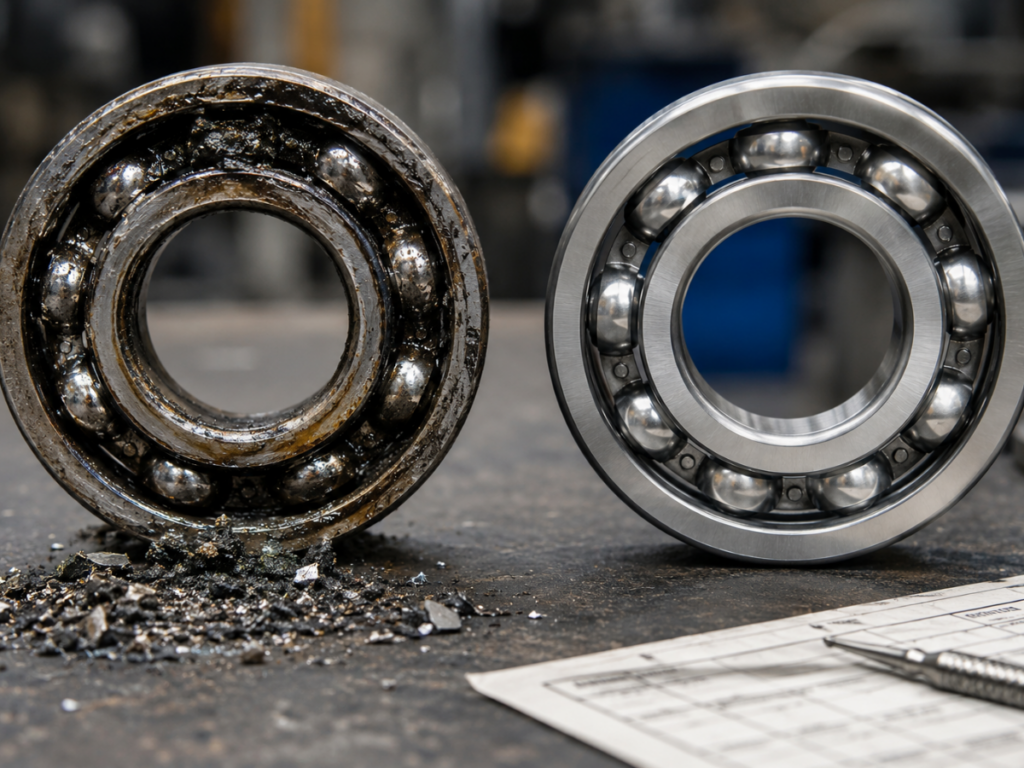
The purchase price of a bearing represents only a fraction of its total lifecycle cost.When a bearing fails prematurely, businesses often face a chain reaction of expenses that extend far beyond the replacement component itself.
Unplanned Downtime
Perhaps the most significant hidden cost of bearing failure is lost production. In many industries, a single machine stoppage can disrupt an entire production process. Maintenance teams must identify the issue, source replacement components, perform repairs, and safely restart operations.
Even a few hours of downtime can cost significantly more than the original bearing purchase.
Increased Maintenance Requirements
Frequent bearing replacements create additional workload for maintenance teams. Repeated breakdowns require more labour hours, additional spare parts inventory, and increased maintenance planning. Over time, these recurring expenses can have a substantial impact on operating costs.
Facilities that experience frequent bearing failures often find themselves trapped in a cycle of reactive maintenance rather than focusing on reliability improvement initiatives.
Damage to Surrounding Components
A failing bearing rarely affects only itself. Excessive vibration, heat generation, and shaft movement can place additional stress on nearby components such as seals, shafts, housings, couplings, and gears.
What initially appears to be a simple bearing replacement can quickly become a more extensive repair involving multiple machine elements.
Reduced Equipment Efficiency
Bearing condition has a direct impact on machine efficiency. When friction levels increase due to wear, contamination, or poor operating conditions, equipment may require more energy to maintain the same level of performance.
While the impact may not be immediately visible, these efficiency losses accumulate over time and contribute to higher operating costs.
Common Reasons Low-Quality Bearings Fail Prematurely
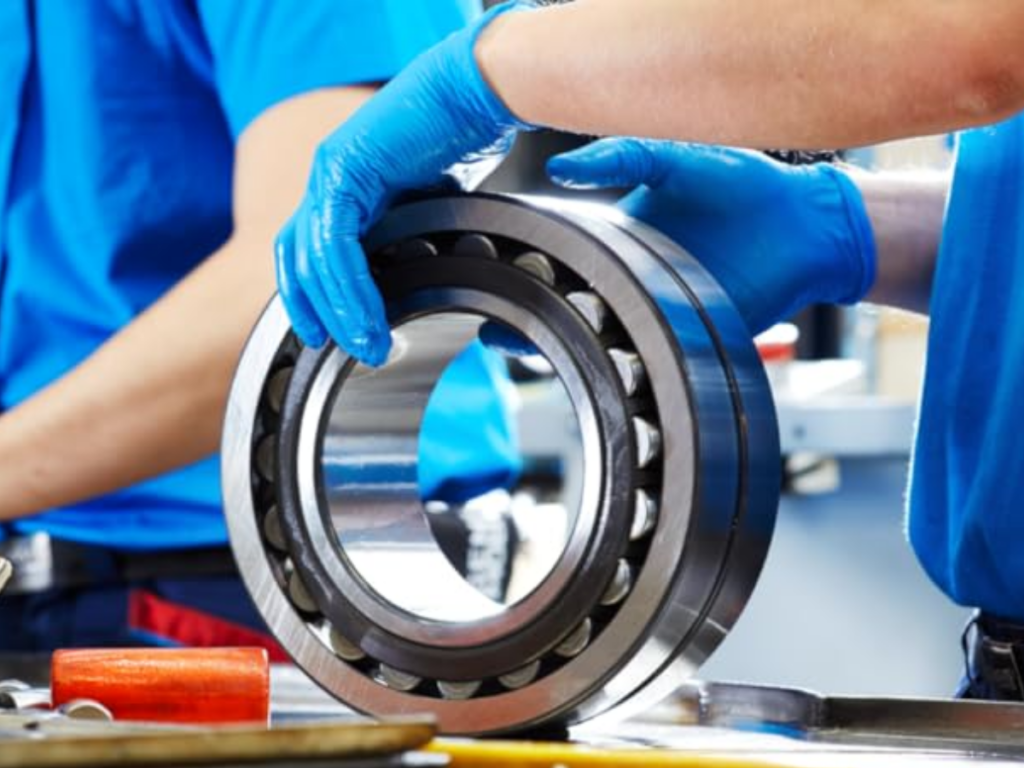
In industrial environments, bearing failures are often linked to a combination of operating conditions and product quality.Some of the most common contributing factors include:
Inadequate Material Quality
The quality of bearing steel plays a major role in determining fatigue resistance and service life. Bearings manufactured using inconsistent materials may experience accelerated wear under demanding operating conditions.
Poor Resistance to Contamination
Industrial environments frequently expose bearings to dust, moisture, debris, and other contaminants. Bearings operating in these conditions require effective sealing and proper maintenance practices to maintain reliable performance.
Lubrication Challenges
High-speed applications depend heavily on proper lubrication. Poor lubricant retention, contamination, or inadequate maintenance can lead to excessive heat generation and premature wear.
Dimensional Inconsistencies
Even small variations in manufacturing quality can contribute to vibration, noise, uneven load distribution, and reduced service life when equipment operates continuously at higher speeds.
Looking Beyond Purchase Price
Many industrial buyers evaluate bearings primarily based on initial cost. However, the lowest purchase price does not always result in the lowest operating cost.A bearing that delivers longer service life, reduced maintenance requirements, and improved equipment reliability often provides significantly greater value over its operating lifecycle.
For maintenance managers and plant operators, the focus should not simply be on purchasing bearings at the lowest possible cost. Instead, the objective should be maximizing equipment uptime, minimizing maintenance interventions, and reducing the total cost of ownership.
Building a More Reliable Operation
Reducing bearing-related failures requires a combination of quality components, proper installation practices, effective lubrication, contamination control, and routine maintenance.
When these factors work together, industrial facilities can achieve improved machine reliability, longer service intervals, and lower operating costs.
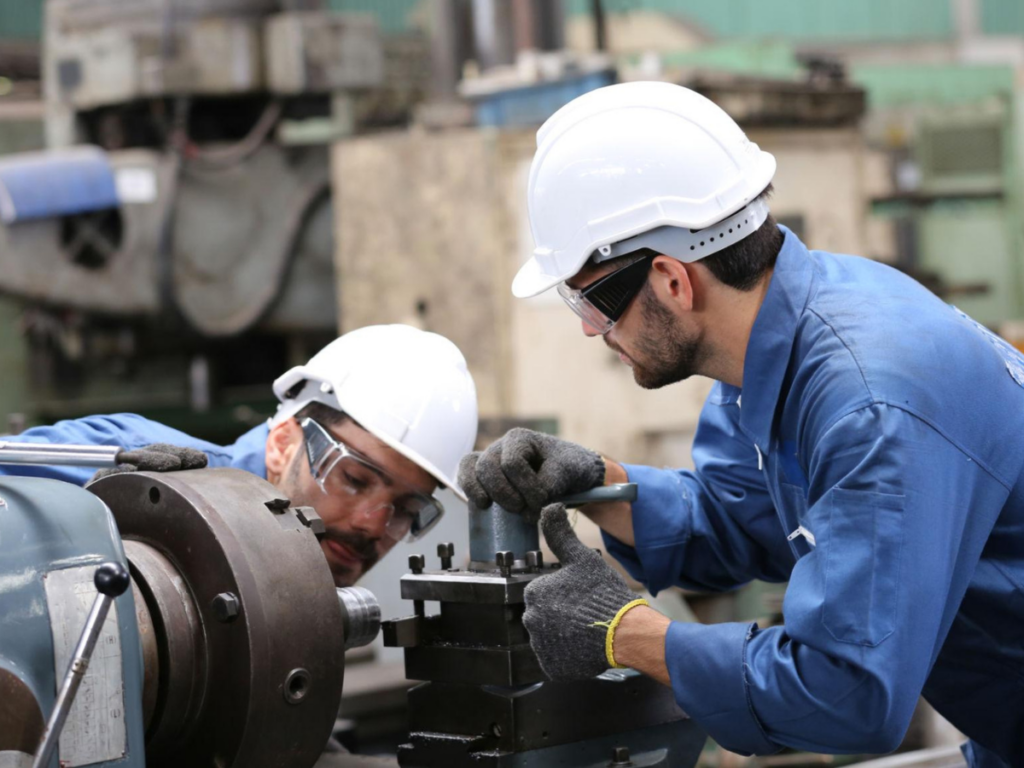
In today’s competitive manufacturing environment, reliability is no longer just a maintenance objective. It is a business advantage.
While bearings may represent only a small portion of a machine’s overall value, their impact on productivity, efficiency, and profitability is far greater than their purchase price suggests. Understanding the hidden costs associated with low-quality bearings helps organizations make smarter decisions that support long-term operational performance.
About ZNL Bearings
ZNL Bearings serves a wide range of industrial applications including electric motors, pumps, gearboxes, conveyors, crushers, agricultural equipment, and general machinery. With a focus on reliability, durability, and industrial performance, ZNL supports customers in improving equipment uptime and operational efficiency across demanding applications.
Choosing the right bearing is not just a purchasing decision, it is an investment in machine reliability and plant performance.
